Four Sofa Stops, One Saturday: A Retail Park Field Guide for UK Buyers
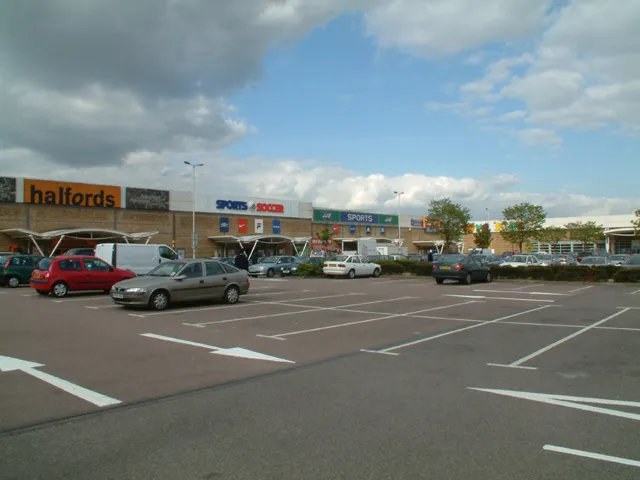
Photo: Stephen Dawson, CC BY-SA 2.0, via Wikimedia Commons
Retail parks are built to make buying a sofa feel like a day out. There is free parking, a coffee kiosk, a loo, and enough square footage to convince you that every decision is a big one. Last Saturday I did the circuit: one big chain, one department-store concession, one specialist upholstery outlet and one independent a few minutes down the road. Same brief at each stop — a three-seater in a hard-wearing fabric, delivered to a first-floor flat in the Midlands. The sofas were similar. The sales tactics were not.
Why the retail park changes the conversation
The first thing you notice is the parking. It is free for three hours, which sounds generous until you realise that three hours is roughly one sofa shop and a sandwich. The second thing is the layout. Every unit is a variation on the same theme: sofas arranged like stage sets, a wall of fabric swatches, and a salesperson who appears just as you touch a cushion. The third thing is the clock. By the time you have parked, queued for a coffee and walked the first showroom, the pressure is already partly self-imposed.
That matters because sofa buying is a like-for-like game. A £1,200 sofa in one shop is not the same as a £1,200 sofa in the next if the frame is chipboard rather than hardwood, the cushions are foam-wrapped rather than fibre-filled, or the guarantee drops from ten years to two. Retail parks make it easy to compare the wrong things — colour, comfort and convenience — and harder to compare the things that decide whether the sofa still feels good in five years.
Stop one: the big chain with the coffee shop
The first stop was the obvious one: a large chain with a cafe near the entrance and a floor full of sofas in every shade of grey. The sales pitch was friendly but rehearsed. I was asked what I was looking for, then steered towards a sofa that was 'on promotion until close of business'. The price was clear, the delivery quote was not. It started at £49 for a named-day slot, then crept up with a removal service for the old sofa and a Saturday delivery premium. None of that is unusual, but it changed the real cost by more than £100.
The lead time was quoted as 'around two to three weeks', which sounded good until I asked whether that was from order or from the warehouse. It was from the warehouse. The sofa I was looking at was in stock in a different fabric, but the one on the floor was a special order. The 'today only' price was genuine in the sense that it would expire, but it was not the only price I would pay. I wrote down the frame guarantee, the cushion filling and the delivery total, and left without signing anything.
Stop two: the department store concession
The second stop was a concession inside a larger home store. The atmosphere was calmer, the sofas were arranged with rugs and lamps, and nobody asked me if I was 'looking for anything special' within ten seconds. That was refreshing. The catch was the paperwork. The concession assistant could sell me the sofa, but the delivery terms came from the host store, and the guarantee came from the manufacturer. Three different sets of small print, three different phone numbers.
I asked for a like-for-like quote on the same specification as stop one. The ticket price was higher, but the delivery was included and the lead time was four weeks. The guarantee was five years on the frame. Whether that was better value depended on how much I valued the certainty of a single point of contact. It was not a bad deal, but it was not a straight comparison either. The concession model works if you are happy to chase things yourself. It works less well if you want one person to own the problem.
Stop three: the specialist outlet
The third stop was a specialist upholstery outlet on the edge of the park. It smelled of new fabric and had fewer sofas, but the ones it did have were clearly made for sitting on rather than looking at. The salesperson knew the difference between a serpentine spring and a pocket spring, and did not pretend otherwise. There was no coffee, no music and no 'today only' banner. There was, however, a ten-week lead time and a delivery charge that depended on postcode.
This was the most useful stop of the day. I could compare the frame, the cushion construction and the fabric rub count without feeling like I was being managed. The price was higher than the chain, but the specification was higher too. The lesson was not that the specialist was better. It was that the chain's 'promotion' had made a lower specification look like a bargain. Once I put the two quotes side by side, the gap was smaller than the ticket prices suggested.
Stop four: the independent down the road
The last stop was an independent shop a five-minute drive from the retail park. It had three sofas in the window, a dog behind the counter and a owner who asked where the sofa was going before asking what colour I wanted. That question changed the conversation. A first-floor flat with a narrow stairwell rules out some corner sofas before you even get to the fabric. The independent quoted a delivery date, a two-man crew and a clear removal fee in one sentence. No premium for a Saturday. No 'today only' price.
The lead time was six weeks. The guarantee was ten years on the frame. The price sat between the chain and the specialist. It was not the cheapest or the most convenient, but it was the easiest to compare. That is worth something when you are spending four figures on something you will sit on every day.
Parking, pressure and the 'today only' trap
The retail park is not the enemy. It is just a place designed to keep you moving. The parking timer, the coffee stop and the sheer number of sofas make it easy to confuse activity with progress. My advice is to treat the circuit like a route march: decide your specification before you go, write down the same five details at every stop — frame, filling, fabric, guarantee, delivery total — and do not buy on the first visit unless the quote is genuinely like-for-like.
'Today only' prices are usually real deadlines, but they are not usually the only deadline. Ask what happens tomorrow. Ask whether the price includes delivery, removal and a Saturday slot. Ask what the lead time is from order rather than from the warehouse. If the answer changes the total by more than the discount, you have your answer.
A route map for next Saturday
Start with the independent or specialist, not the big chain. You will learn what a good sofa feels like before the showroom lighting and the sales patter get to work. Then visit the chain with a written quote in hand and compare the specification, not the ticket price. Leave the concession until last, when you are tired enough to appreciate a calm room but sensible enough to read the small print. And set a parking timer for two hours, not three. The extra hour is where the impulse buy lives.
I left the retail park without a sofa and with a parking ticket. The ticket was cheaper than the delivery premium I had nearly accepted at stop one. That felt like a fair trade for a Saturday spent learning how the sofa strip really works.