The £40 Spray: Does Fabric Protection Earn Its Keep on a British Sofa?

Photo: Donald Olszewski, CC BY 4.0, via Wikimedia Commons
Fabric protection is the sofa world's answer to the extended warranty: cheap enough to shrug at, mysterious enough to regret. At the till, it is usually pitched as a £30–£50 add-on, applied before delivery or in the first few weeks. The patter is persuasive — 'liquid just beads off' — but the useful question is narrower. On a UK sofa, against British accidents, does it actually change the outcome?
We are not a lab. This is an editorial test, using retail swatches and a treated sample, not a controlled scientific trial. Treat it as a shopper's field guide, not a guarantee.
What's Actually in the Bottle?
Most retail fabric-protection treatments are water-based or solvent-based carriers with a fluoropolymer, silicone or wax-like finish. Some newer products advertise themselves as PFAS-free, which matters if you care about the forever-chemical conversation. The treatment lowers the surface energy of the fabric so water-based liquids sit on top rather than sinking in. It is not a coating you can see, and it does not fill the weave.
That distinction explains most of the confusion. Protection helps with liquids that are mostly water. It is much less impressive against oils, pigments and anything that needs agitation to lift. It also wears. Foot traffic, body oils, sunlight and cleaning all degrade the finish, which is why some providers bundle an annual top-up.
The Four-Spill Saturday Test
We tried four everyday accidents on a treated woven swatch and an untreated control: a mug of builder's tea with milk, a splash of red wine, a muddy paw print and a biro line.
Tea was the easy win. On the treated sample, the liquid beaded for long enough to blot it with a clean cloth. The untreated side darkened immediately. But tea with milk is not pure water. The milk left a faint shadow on the treated side once dry. Protection bought time; it did not erase the event.
Red wine was more honest. A fresh splash sat on the surface briefly, and blotting removed most of the colour. Left for five minutes, it began to wick into the weave. The treated side was better, but not untouched. If you knock a glass over during Strictly and reach for a cloth within seconds, protection earns its keep. If it soaks overnight, no spray will save you.
Muddy paws were a mixed result. The treated surface released the mud more easily under a damp cloth, but the grit still needed lifting. Protection helps with the rinse, not the retrieval. On a bouclé-style loop, mud can sit in the loops regardless.
Biro was the reality check. A ballpoint line is oil-based and pigment-rich. The treated side showed a slightly weaker line, but it still needed a specialist solvent cleaner. This is where the 'beads off' demo starts to feel like a magic trick aimed at the wrong audience.
Where Protection Helps — and Where It Doesn't
It is worth paying for if your sofa is in a high-risk zone: a family room, a rental with a deposit on the line, or a light-coloured woven fabric in a household where tea and red wine are regulars. It is also useful if you want a window to blot rather than panic.
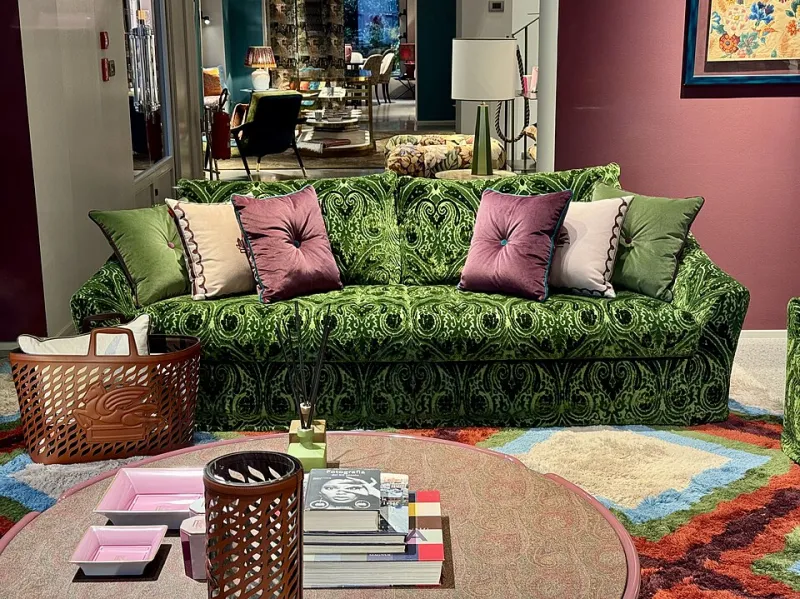
It is less useful on velvet, which has a pile that can crush and mark with water anyway. Some protection treatments can leave a stiff handle or alter the nap. On bouclé, the looped texture traps crumbs and pet hair; a spray does not stop that. On aniline or unfinished leather, fabric protection is irrelevant. On a washable loose-cover sofa, the cover is your protection.
Bouclé, Velvet and the Care-Label Trap
Here is the bit the checkout script often skips: the treatment has to be compatible with the care label. A retailer-applied protector may be fine on a standard woven polyester, but some manufacturers specify dry-clean-only or water-based cleaning codes. If the spray changes the fabric's response to water, a later professional clean can behave unpredictably.
With bouclé, the risk is over-wetting and pile distortion. With velvet, it is crushing and shading. With a wool blend, it is felting if too much water is used. Ask whether the protection is applied by the retailer, by a third-party technician, or by you with a can. The first two usually come with paperwork; the third is where warranties get wobbly.
The Warranty Question Nobody Asks
Fabric protection is not a warranty. It may sit alongside one, or it may be sold as a condition of a stain guarantee. Those are different products. A stain guarantee often requires you to report spills within a set time, use approved cleaners and accept a replacement or professional clean rather than a cash refund.
Ask three things: Does the treatment affect my statutory rights? Does it change the manufacturer's care instructions? And does the guarantee cover accidental stains or only manufacturing faults? If the answer is vague, the £40 is buying reassurance, not protection.
Is It Ever Worth £40?
Yes, in a narrow set of circumstances. You have a light woven fabric, a busy household, and a realistic expectation that protection buys you minutes, not immunity. You are happy to blot immediately and re-treat annually. The retailer puts the terms in writing, including what happens if the treatment fails.
No, if you are buying it to avoid care. No spray replaces regular vacuuming, plumping and prompt cleaning. No treatment makes biro, curry or felt-tip invisible. And no upsell is worth it if it conflicts with the care label or your insurance.
Five Questions Before You Say Yes
- Which fabrics is this product approved for, and is my sofa one of them?
- Is it applied before delivery, and who applies it?
- Does it change the cleaning code or dry-clean-only instruction?
- What does the guarantee actually cover, and what must I do to keep it valid?
- Can I have the product name and safety data sheet before I pay?
Fabric protection is not snake oil, but it is not a force field either. It is a modest chemical shortcut that gives you a few extra seconds with a cloth. At £40, that can be decent value. At £40 plus false confidence, it is just another upsell.