The Lounge Light Audit: Testing Sofa Shades Before the Van Leaves
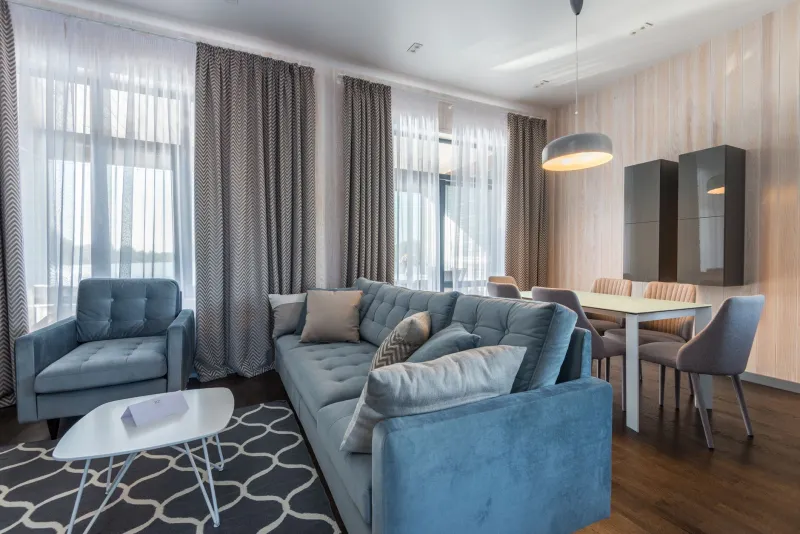
There is a particular moment of buyer's remorse that has nothing to do with comfort, size or price. You finally get the sofa into the lounge, step back, and realise the colour you fell for in the showroom has quietly disappeared. The warm oatmeal now reads as cold porridge. The rich navy looks almost black. The bouclé that seemed so cosy under retail lighting now looks like a lumpy grey cloud.
In a north-facing British room in November, this is not a rare glitch. It is the default setting. Our winter light is low, grey and often indirect, and it does strange things to fabric, leather and painted finishes. The good news is that you can test for it before the delivery van arrives. You just need to stop trusting the showroom and start trusting your own lounge.
Why North-Facing Rooms Are Their Own Beast
A south-facing room gets direct sun for part of the day, which warms everything up. North-facing rooms get the leftovers: cool, indirect, blue-ish light that flattens contrast and mutes warmth. In winter, when the sun sits low and the skies are more grey than blue, that effect is turned up. A colour that looks inviting in a bright retail hall can look drab against a north-facing wall.
It is not just colour, either. Texture changes too. Velvet pile catches light differently depending on the angle, so a sofa that looked plush in the showroom can look patchy near a window. Linen and slubby weaves show every shadow. Bouclé, that current favourite, can look beautifully tactile under warm light and slightly untidy under cool light. Leather can go from warm tan to chilly brown.
The same applies to storage. A sideboard in a warm oak veneer can look orange under showroom spots and washed-out next to a north-facing wall. A matt grey TV unit can look elegant in the shop and slightly industrial at home. Gloss finishes reflect whatever is in the room, including grey skies and the telly.
The Showroom Is Not Lying, Exactly
Retail lighting is designed to sell. It is bright, often warm, and angled to pick out texture and sheen. That is not a conspiracy. It is just a controlled environment. The problem is that your lounge is not a controlled environment. It has a window, a wall colour, a floor, a sofa-shaped gap and a British weather system outside.
Some showrooms are better than others at providing neutral light or honest samples, but you should assume the lighting is flattering until proven otherwise. The only reliable test is to get a piece of the actual material into your actual room.
A Practical At-Home Sample Routine
Start by asking for physical swatches. Most sofa brands offer free or low-cost fabric samples, and many will send finish samples for sideboards and TV units too. If you are buying in-store, ask if you can take a swatch home before ordering. A good retailer will not mind. If they do mind, treat that as useful information.
When the samples arrive, do not just hold them up for ten seconds and nod. Give them a proper trial:
- Tape each swatch to the back of a chair or the wall where the sofa will actually sit. Leave it there for at least 48 hours.
- Check it at different times: early morning, midday, late afternoon and under your evening lamps. North-facing winter light changes fast.
- Hold a plain white sheet of A4 paper next to the sample. It gives your eye a neutral reference and stops the wall colour from fooling you.
- Photograph the sample without filters, then look at the photo on a different screen. Phone cameras are not perfect, but they can reveal a colour shift you missed in person.
- Compare the sample against your floor, curtains, rug and wall paint. A sofa does not exist in isolation. It has to get on with the room.
- Touch it. Texture matters as much as shade. Run your hand across the sample, look at it from an angle, and see how it behaves when the light is behind it.
If you are choosing a sideboard or TV unit, ask for a door or finish sample rather than relying on a tiny chip. Painted finishes and veneers can look very different across a whole panel. A grey that looks soft on a small chip can look cold and flat across a metre of cupboard door.
The Return-Window Trap
This is where the light problem gets expensive. Online orders in the UK normally come with a 14-day cooling-off period under consumer contracts rules, but that is not a magic undo button for every purchase. In-store buys are usually subject to the retailer's own returns policy, which may be strict. Made-to-order sofas are often excluded altogether. Some online retailers charge collection or restocking fees.
Before you pay, check three things: the returns window, who pays for return delivery, and whether your chosen fabric or finish counts as custom or made-to-order. If you are buying online, keep the packaging until you are sure. Do not cut off tags or let the cat use the sofa as a scratching post while you are still deciding. If the sample looks wrong in your room, contact the retailer before delivery if you can. Cancelling early is usually simpler than sending a sofa back.
It also helps to ask what happens if the colour looks different in your home. Some retailers will accept a return, some will offer an exchange, and some will politely point at the terms and conditions. None of this is a reason to avoid buying. It is a reason to do the sample test first.
A Simple Rule for North-Facing Rooms
If your room gets cool, indirect light, do not fight it blindly. Warm undertones, textured weaves and mid-tones tend to hold their own better than very pale greys, cold silvers or deep colours that can collapse into black. That said, personal taste matters. If you want a cool, minimal room, a north-facing space can support that beautifully. Just choose the shade with your eyes open, not under a spotlight.
The showroom is a useful starting point, not a verdict. Your lounge has the final say. Get the sample home, leave it there for a couple of days, and let the grey November light tell you the truth before the van arrives.