Too Close to the Radiator: Mapping Sofa Placement Around Heat, Cold Walls and Winter Bills
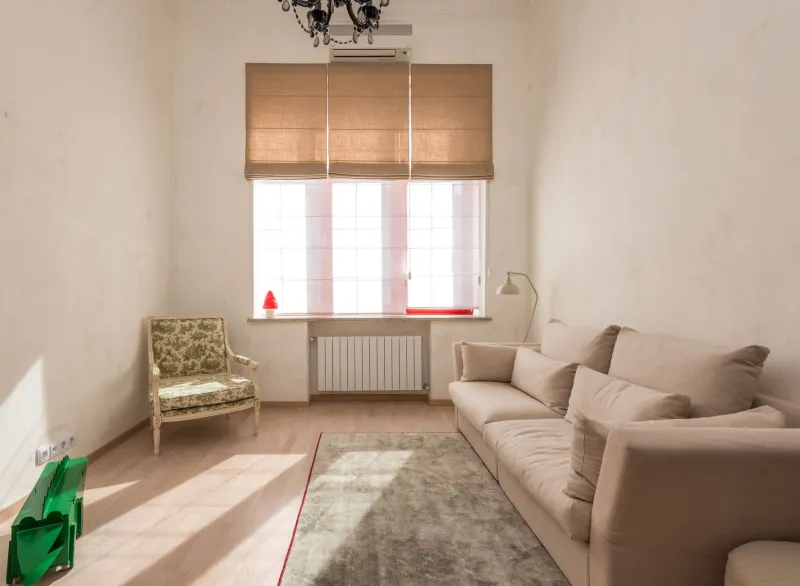
In a lot of British living rooms the layout is decided by three things: where the telly goes, where the door swings, and where the sofa will physically fit. The radiator, tucked under the window since about 1974, is treated as scenery. It gets painted, it gets a shelf, and it gets a sofa backed right up against it. Then, four or five winters later, the rear cushions have gone slightly crunchy and nobody quite knows why.
This isn't another piece about whether a three-seater will clear your stairwell. It's about the slower, quieter maths of where a sofa sits in relation to heat — and why the wrong gap can cost you both a fabric and a gas bill.
Heat damage doesn't announce itself
Upholstery rarely fails in a dramatic way. It degrades. Foam loses its bounce as the plasticisers migrate out of it. Backing cloths go dry and start to shed. Leather — especially the corrected-grain stuff on mid-market sofas — cracks along the flex lines where a chair has been baked from behind for years. Dye fades unevenly, so one arm goes two shades lighter than the other.
The mechanism is simple enough: warm, dry air pulls moisture out of fibres and accelerates oxidation. A sofa parked 10cm from a working radiator can sit in a pocket of air that runs 10–15°C hotter than the rest of the room, and it does so for five months a year. That's not a cushion problem, it's a microclimate problem.
The bit that surprises people: pushing the sofa back can cost you money
A radiator doesn't heat a room by glowing at it. Convector output depends on air moving freely up through the fins and out of the top grille, which is why a shelf too close above one wrecks its performance. A sofa pressed against the front does something similar: it creates a dead zone, the warm air pools behind the back panel, and the TRV on the other side of the room reads a temperature that isn't really the room's temperature.
The result is a thermostat that keeps calling for heat while one corner of the lounge quietly cooks. Households then shove a throw over the sofa to keep it warm, which traps even more heat, and the whole arrangement becomes a small enclosed oven with a fire-risk label on it. Lifting a sofa 20–30cm off a radiator usually warms the room better, not worse — the same heat reaches the middle of the floor instead of your cushions.
Not every fabric minds equally
A rough order of heat tolerance, from most to least forgiving:
- Wool and wool-blend weaves. Handle dry warmth well. Rarely the problem.
- Cotton and linen. Fade before they fail. Expect a faint shadow where the radiator has been.
- Bouclé and other looped yarns. Tolerate heat but collect dust in dry air, and the loops snag and pill in a warm, static-heavy corner.
- Velvet and viscose blends. Pile crushes and takes a permanent sheen. Viscose in particular can scorch under sustained radiant heat.
- Bonded leather and PU. Dries, cracks, peels from the backing. This is the one that fails visibly.
- Budget polyester mixes. Heat-set fibres can glaze or shine where they've been warmed for years.
If your heart is set on a leather sofa and the only wall is above a radiator, that's your cue to look at a vertical radiator on the return wall instead. It's a cheaper decision now than a replacement at year six.
Clearances that mean something
Ignore the vague 'leave a gap' advice. Measure at the closest point, at the top of the radiator, not the floor:
- 20cm minimum for a standard panel radiator with a low-to-mid back sofa (under 90cm tall).
- 30cm if the radiator is a high-output double, or the sofa back is tall and solid.
- 5–10cm off any uninsulated external wall even with no radiator — more on that below.
- Never directly under a radiator shelf with a sofa back inside the draught.
A radiator deflector — the curved plastic or metal plate that clips onto the bottom — pushes warm air out into the room rather than up the back of your furniture. They cost less than a takeaway and they're the single cheapest fix in this whole article.
The cold wall nobody talks about
Here's the one that catches out Victorian terrace owners. A sofa shoved flat against a solid brick external wall stops the room air circulating behind it. Warm, moist indoor air meets a cold surface, and you get condensation on the plaster and the skirting — and eventually mould on the back of the sofa itself, which is almost impossible to clean.
A 5–10cm air gap isn't about the radiator at all. It's about letting that wall breathe. It also makes the sofa easier to hoover behind, which matters more than anyone admits.
Windows are a light problem, not a heat problem
If a sofa sits sideways in a south-facing bay, you'll get what upholsterers call a half-a-sofa fade — one arm bleached, the other not. Blinds with the slats angled rather than fully closed cut UV without making the room gloomy. Rotating the sofa once a year, if the layout allows, evens out the wear.
Test the spot before the van arrives
You don't need a thermal camera. You need one evening and a bit of patience.
- Mark the footprint. Masking tape on the floor, or flattened cardboard boxes. Sit in the spot at the time of day you'd actually use it — a Sunday evening is the honest test, not a Saturday morning.
- Run the heating as normal for a week with the marker in place. If the room suddenly feels colder than it did before, you've found a convection problem, not a sofa problem.
- Borrow or buy a cheap infrared thermometer (under £20 online) and take readings at cushion height in three places: directly above the radiator, at the sofa's proposed back, and in the middle of the room. A 10°C+ difference at the back is your warning sign.
- Check the wall. On a cold morning, run a hand behind the tape line. Damp or a cold draught means you need that air gap.
- Ask the silly question. Would you happily sit there in January with the heating on and the curtains shut? If the answer is no, the layout is wrong, not the sofa.
The quick checklist
- Measure the gap at the top of the radiator, not the bottom.
- 20cm minimum, 30cm for tall backs and high-output panels.
- Fit a deflector rather than moving the sofa into the middle of the room.
- Leave 5–10cm behind the sofa on any external wall.
- Keep throws off the back of a sofa that sits near a heat source.
- Angle blinds rather than closing them fully on south-facing glass.
- Rotate the sofa annually if the layout allows it.
- Re-check the TRV after the layout changes — it may now read the room properly, and you might be able to turn the boiler flow down a notch.
None of this requires buying anything. It's mostly about stopping treating a radiator as a wall feature and starting to treat it as an appliance that needs somewhere to push air. Get that right and your fabric lasts longer, your lounge heats more evenly, and you stop paying to warm the back of a cushion.